Buy simcards.eu ?
We are moving the project
simcards.eu .
Are you interested in purchasing the domain
simcards.eu ?
domain@kv-gmbh.de · 0541-91531010
Buy simcards.eu ?
Should one round down or round up?
Whether to round down or round up depends on the specific situation and the context in which the rounding is being applied. In general, if the decimal portion is less than 0.5, it is common to round down, and if the decimal portion is 0.5 or greater, it is common to round up. However, it is important to consider the impact of rounding on the overall accuracy and fairness of the calculation. In some cases, rounding up may be more appropriate to ensure that the result is not underestimated, while in other cases, rounding down may be more appropriate to avoid overestimation. Ultimately, the decision should be based on the specific requirements and goals of the calculation. **
Should one round up or round down at 5?
When rounding at 5, it is generally accepted to round up. This is because rounding up at 5 follows the standard rounding rule of rounding up when the digit to the right is 5 or greater. Rounding down at 5 would not be consistent with this rule and could lead to confusion in mathematical calculations. Therefore, it is best to round up at 5 to maintain consistency and accuracy in rounding. **


Similar search terms for Round
Top-Angebote
Products related to Round:
-
Melrose International "Round Ornate Geometric Print Tray 17.5""D"Elevate your home décor with the Round Ornate Geometric Print Tray. Featuring bright white and beige tones with bold black trim, this tray is designed to stand out with its intricate geometric pattern.33,99 $*Shipping: 0,00 $Secure redirect to the provider
-
Melrose International "Round Mushroom and Floral Print Tray 13.5""D"Bring a whimsical, nature-inspired touch to your home with this Round Mushroom and Floral Print Tray. Featuring soft sage green and teal tones, this charming tray is adorned with an elegant sketch-style print of mushrooms, florals, and leaves.37,99 $*Shipping: 0,00 $Secure redirect to the provider
-
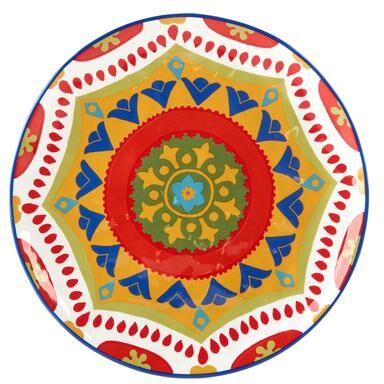
"Certified International Spice Love Round Platter - 13"" Diam x 1.25""""Imagine presenting your culinary masterpieces on a canvas as vibrant and inviting as the dishes themselves with Certified International's ""Spice Love"" 13"" Round Serving Platter."22,31 $*Shipping: 0,00 $Secure redirect to the provider


-
Do I need to round up or round down?
Whether you need to round up or round down depends on the specific rounding rule you are following. If you are rounding to the nearest whole number, you would round up if the decimal portion is 0.5 or greater, and round down if it is less than 0.5. If you are rounding to a specific decimal place, you would round up if the digit to the right of the rounding position is 5 or greater, and round down if it is less than 5. It's important to be clear on the rounding rule being used in order to determine whether to round up or round down. **
-
Can my teacher round up?
It ultimately depends on your teacher's policy and discretion. Some teachers may have a strict policy against rounding up, while others may be more flexible and willing to round up if they feel it is appropriate. It's best to approach your teacher and politely ask if they would consider rounding up your grade. Be sure to have a valid reason and evidence to support your request. **
-
How do you round percentages up?
To round percentages up, you would look at the decimal place immediately to the right of the desired rounding point. If that digit is 5 or greater, you would round the percentage up by increasing the digit in the rounding point by 1. For example, if you have a percentage of 45.6% and you want to round it up to the nearest whole number, you would round it up to 46%. **
-
Why do we round centuries up?
We round centuries up to simplify and organize historical timelines. By rounding up to the nearest hundred years, we can easily categorize events and periods into distinct centuries. This helps us better understand and analyze historical events in a structured manner. Additionally, rounding up centuries makes it easier to compare and contrast different time periods. **

Why do we round up centuries?
We round up centuries for simplicity and convenience in communication. It is easier to refer to a specific time period by rounding up to the nearest hundred years rather than specifying the exact year. Rounding up centuries also helps to categorize historical events and periods into more manageable and understandable chunks. Additionally, rounding up centuries can help to provide a broader perspective on the passage of time and historical significance. **
How do you round up here?
Here at this establishment, we round up to the nearest whole number. If the number is 0.5 or greater, we round up to the next whole number. If the number is less than 0.5, we round down to the current whole number. This ensures that the rounding is consistent and fair for all calculations. **
Top-Angebote
Products related to Round:
-
Melrose International "Round Etched Metal Tray 13.5""D"Add a statement piece to your décor with this round etched metal tray. Featuring an earthy green tone with a distressed painted design and glossy glazed finish, this tray offers a modern yet rustic charm.38,99 $*Shipping: 0,00 $Secure redirect to the provider
-
Melrose International "Round Ornate Geometric Print Tray 17.5""D"Elevate your home décor with the Round Ornate Geometric Print Tray. Featuring bright white and beige tones with bold black trim, this tray is designed to stand out with its intricate geometric pattern.33,99 $*Shipping: 0,00 $Secure redirect to the provider
-
Should one round down or round up?
Whether to round down or round up depends on the specific situation and the context in which the rounding is being applied. In general, if the decimal portion is less than 0.5, it is common to round down, and if the decimal portion is 0.5 or greater, it is common to round up. However, it is important to consider the impact of rounding on the overall accuracy and fairness of the calculation. In some cases, rounding up may be more appropriate to ensure that the result is not underestimated, while in other cases, rounding down may be more appropriate to avoid overestimation. Ultimately, the decision should be based on the specific requirements and goals of the calculation. **
-
Should one round up or round down at 5?
When rounding at 5, it is generally accepted to round up. This is because rounding up at 5 follows the standard rounding rule of rounding up when the digit to the right is 5 or greater. Rounding down at 5 would not be consistent with this rule and could lead to confusion in mathematical calculations. Therefore, it is best to round up at 5 to maintain consistency and accuracy in rounding. **
-
Do I need to round up or round down?
Whether you need to round up or round down depends on the specific rounding rule you are following. If you are rounding to the nearest whole number, you would round up if the decimal portion is 0.5 or greater, and round down if it is less than 0.5. If you are rounding to a specific decimal place, you would round up if the digit to the right of the rounding position is 5 or greater, and round down if it is less than 5. It's important to be clear on the rounding rule being used in order to determine whether to round up or round down. **
-
Can my teacher round up?
It ultimately depends on your teacher's policy and discretion. Some teachers may have a strict policy against rounding up, while others may be more flexible and willing to round up if they feel it is appropriate. It's best to approach your teacher and politely ask if they would consider rounding up your grade. Be sure to have a valid reason and evidence to support your request. **
Similar search terms for Round
-
Melrose International "Round Mushroom and Floral Print Tray 13.5""D"Bring a whimsical, nature-inspired touch to your home with this Round Mushroom and Floral Print Tray. Featuring soft sage green and teal tones, this charming tray is adorned with an elegant sketch-style print of mushrooms, florals, and leaves.37,99 $*Shipping: 0,00 $Secure redirect to the provider
-
"Certified International Spice Love Round Platter - 13"" Diam x 1.25""""Imagine presenting your culinary masterpieces on a canvas as vibrant and inviting as the dishes themselves with Certified International's ""Spice Love"" 13"" Round Serving Platter."22,31 $*Shipping: 0,00 $Secure redirect to the provider
-
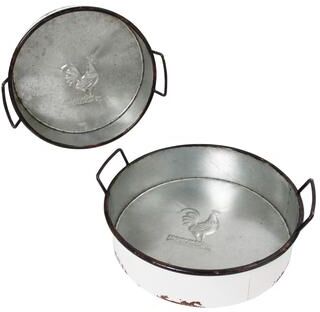
Gerson International Decorative Farmhouse Set of 2 Round Nesting Metal TraysAdd rustic elegance to your decor with this set of 2 round nesting metal trays. Featuring large and sizes, these versatile trays are perfect for creating beautiful displays of candles, plants, or seasonal decorations.49,99 $*Shipping: 0,00 $Secure redirect to the provider
-
How do you round percentages up?
To round percentages up, you would look at the decimal place immediately to the right of the desired rounding point. If that digit is 5 or greater, you would round the percentage up by increasing the digit in the rounding point by 1. For example, if you have a percentage of 45.6% and you want to round it up to the nearest whole number, you would round it up to 46%. **
-
Why do we round centuries up?
We round centuries up to simplify and organize historical timelines. By rounding up to the nearest hundred years, we can easily categorize events and periods into distinct centuries. This helps us better understand and analyze historical events in a structured manner. Additionally, rounding up centuries makes it easier to compare and contrast different time periods. **
-
Why do we round up centuries?
We round up centuries for simplicity and convenience in communication. It is easier to refer to a specific time period by rounding up to the nearest hundred years rather than specifying the exact year. Rounding up centuries also helps to categorize historical events and periods into more manageable and understandable chunks. Additionally, rounding up centuries can help to provide a broader perspective on the passage of time and historical significance. **
-
How do you round up here?
Here at this establishment, we round up to the nearest whole number. If the number is 0.5 or greater, we round up to the next whole number. If the number is less than 0.5, we round down to the current whole number. This ensures that the rounding is consistent and fair for all calculations. **
* All prices are inclusive of VAT and, if applicable, plus shipping costs. The offer information is based on the details provided by the respective shop and is updated through automated processes. Real-time updates do not occur, so deviations can occur in individual cases. ** Note: Parts of this content were created by AI.